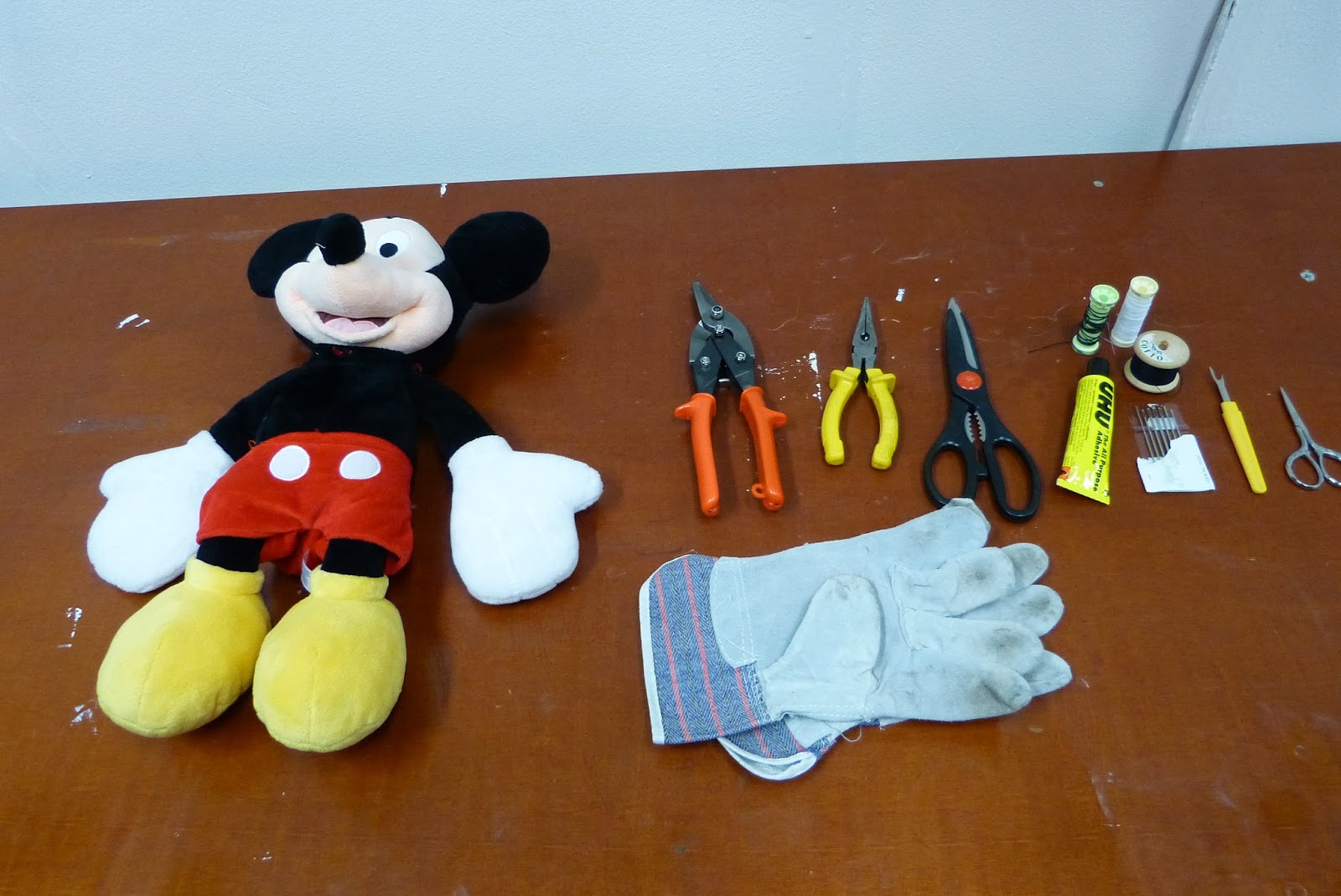
After finding performance with the puppets a little tricky and also painful to a degree me and Mark even came up with the idea of trying to make harnesses to tackle this. We got some old pipes and bits and bobs to create some type of harness that could attach to our bodies. This type of idea actually came from seeing some images of Jim Henson with a type of harness to help him hold up Kermit.


Mark's friend lent him a couple of puppets they use to perform with and we tried out some of the pipes inside of the puppets to see how they felt and for comfort. It was a little more tricky to create some belts for us to attach the pipes to. Sadly more for me because of my smaller frame a lot of the belts would fall to my feet and we had to tighten them with clips.


We did try some tests with the harnesses in class and filmed them.
Puppet site
It was through this that I found out that some of the trouble me and Mark were having with performing was not so uncommon. Such as our puppets sinking down and finding it difficult to open the puppets mouths correctly.
Some advice includes :
The Human Arm and Hands
Human arm puppets are good to use and see, but the audience shouldn’t see an actual human arm or hand. If you raise your puppet too high, the audience can see its bottom edge and your arm which ruins the illusion of lifelikeness that you want to maintain. When using the arm rods, be careful that you don’t raise your hand over the top of the theater. When adult members of the audience see an arm or hand, they’ll politely overlook it, but you can’t count on that with children. If one sees it, you can safely assume that they’ll point it out to their friends next to them and will miss out on what the puppet is saying at that point.
Human arm puppets are good to use and see, but the audience shouldn’t see an actual human arm or hand. If you raise your puppet too high, the audience can see its bottom edge and your arm which ruins the illusion of lifelikeness that you want to maintain. When using the arm rods, be careful that you don’t raise your hand over the top of the theater. When adult members of the audience see an arm or hand, they’ll politely overlook it, but you can’t count on that with children. If one sees it, you can safely assume that they’ll point it out to their friends next to them and will miss out on what the puppet is saying at that point.
During practices continue to focus on what each puppeteer should do to maintain quality in your programs, but don’t overlook these three things they shouldn’t do.
The Dreaded Quicksand Patches
We recently began training some new puppeteers and one of the first things they realized was that it takes work to keep a puppet up in the air for 3 or 4 minutes. Their arms were sore after their first 3 minute routine and even more so after the second and third. One of the keys during your practice time is to work on conditioning the puppeteer’s arms so they can hold them at a consistent height for several minutes at a time. The second key is to make sure they concentrate on their puppet as much as possible. If these two keys are missing, you’ll run into quicksand patches in your theater where the puppet slowly sinks until just the top of the head is showing.
We recently began training some new puppeteers and one of the first things they realized was that it takes work to keep a puppet up in the air for 3 or 4 minutes. Their arms were sore after their first 3 minute routine and even more so after the second and third. One of the keys during your practice time is to work on conditioning the puppeteer’s arms so they can hold them at a consistent height for several minutes at a time. The second key is to make sure they concentrate on their puppet as much as possible. If these two keys are missing, you’ll run into quicksand patches in your theater where the puppet slowly sinks until just the top of the head is showing.
If the puppeteer’s arm tires quickly they’ll begin to lose focus on the puppet and just try to make it through the presentation. Without the right concentration, they begin to relax their arm which causes the puppet to sink. When that happens, the audience begins to wonder how far down it’ll go or they’ll silently urge it to come back up. Either way, they’re focused on a puppet and not the message.
If you find yourself in this situation, don’t just pop the puppet up because that’ll draw attention to it. Slowly raise it up to the proper height and continue the play.
I also did find some YouTube videos that could also help out with some of the trouble which became pretty useful especially in how to make our puppets talk.
In general it does seem that most likely that you sometimes just need to suck it up and try your best to not make mistakes. Especially since it is the puppets who will be on camera and not ourselves unless we do a live performance. We will have to practice a lot more and to get it just right and will probably have to get a extra body in to help us film to let us know when were in frame and we are showing beside the puppets.